Friday, 5 April 2013

Evaluation Question 5

How did you attract/address your audience?
We attracted our audience by doing target research on what they liked to see in a horror film and then we thought how we could incorporate that into our film opening.  The feedback that we got from our target audience was very useful and it helped us a lot to decide what to put in our film opening.  We also had an idea from the research to see what films they liked and disliked so that we could use features from these films in our sequence to make it effective.  Furthermore, we also noted the films that were unsuccessful and what to avoid in order to make our film sequence believable.  Below are some examples of films that were mentioned in our research by the audience.


Production:
When starting production, we knew what we had to do to make our opening sequence effective and to entice the audience.  At first, our production was not going well and we knew we had to make changes otherwise our sequence would be unsuccessful.  In our first sessions of filming, we had a storyline that consisted of a couple in which the girlfriend ended the relationship.  Then, the boyfriend would become a villain and attack/kill the girl.  When filming, time was wasted of recording the girl putting on make-up to go out, and we got nowhere with filming terms.  We then realised it was not good enough, and that it would not attract our audience with this type of storyline or filming.  We realised that no conventions of horror were in our sequence, and that too much time and focus had been wasted on the girl.
We therefore came together as a group and changed the story and base of our film so it was more interesting and well-equipped to being the beginning of a horror movie.  We changed actors of which we felt would be better suited for the film and also reliable to be there whenever we needed to film.  At the end of filming, we feel that we included conventions of horror that were necessary in a film to attract the audience.
 
As well as the characters, we tried to incorporate different scenes into the opening sequence of which would normally be seen in a horror movie.  This would therefore attract the audience because they would be getting the same feeling as they would from another horror film.  In the scenes, we would include elements that would normally be in a horror movie and also how they are produced into the storyline.


In this example, I have shown what weapons are used from our opening sequence compared to films such as Friday the 13th, The Shining and The Texas Chain Saw Massacre  By having this contrast, we can see the types of weapons used and if it is a successful film, it could be used as an element to attract the audience.
 

Looking at different films, we thought that using and involving a knife in our opening sequence would be the most appropriate and therefore attract the audience.  Commonly, the knife is used as a weapon as they are easy to get hold of at any age, and therefore we applied this to our opening sequence.


I researched Final Destination as a comparison to our film opening as it is similar in the sense of the characters and the brutality of the attacks involved in both films.  Despite the storylines being very different, they are both horror movies in which the main characters are teenagers/young adults, which is therefore appropriate to attract our audience into watching our film.  As well as comparing the two film openings/trailors, this was a film that we received in our target audience research in films that they enjoyed watching or liked conventions out of.  Therefore we felt that we should take this research and include elements that both ourselves and the target audience enjoyed.
 
An example of a convention that we include was the use of blood, which was used in our opening sequence upon the victim, and which would also be used throughout the film with the other victims.

In the end, the elements that we included and effect we made worked well with our target audience as they enjoyed our film opening.  By doing the research of other films and incorporating elements and conventions into our film opening, we were able to attract our target audience we were aiming for, and therefore our product was enjoyed by our aimed audience.


Evaluation Question 6

What have we learnt about technologies from the process of constructing this product?


Thursday, 4 April 2013

Evaluation Question 7

Looking back at your preliminary task, what do you feel you have learnt in the progression from it to the full product?

We were given the task of creating a preliminary piece to show basic understanding of film. Within this sequence we were asked to include a few things; a continuity series, the 180 degree rule and a sequence of shot reverse shot. 

Looking back at our preliminary we could see the key areas of weakness that we knew we would get marked down for. 

One of the biggest weaknesses was continuity. When filming for our preliminary we had to re-film parts of it on different days, this caused problems with the continuity of the film as objects that were present in the background disappeared or re-appeared and things like the actors hairstyle would have changed or slight differences with clothing. To prevent this from happening when filming for our opening we would over film all clips extending the beginning and end so there is extra footage to work with when editing and to film the same clips but at more than one different angle. 


The preparation for the preliminary was very different and allot more simple than the preparation we had to go through for out film opening.
When it came to the opening task there were so many more things in which we had to consider. We had to plan the actors costume, make up, consider the target audience, the usage of props around the room and special effects.

We learnt to plan this all in our story board to make it clear exactly what had to be present in the shot, however as we filmed we were continuously making changes and minor improvements to the story line, adjusting small details that we would improve or had forgotten to include.


We learnt the importance of lighting when filming. When we filmed our preliminary all of it was filmed during the day and inside a building with lighting so no thought had to go into it. The majority of our opening was filmed outside and because our genre was horror we did not want it to be bright sunlight, we didn't consider the darkness of the light outside and ended up re-filming as it was ether too dark or clips couldn't be used together as the light present was different. We filmed on a windy day and had to make sure when editing cuts that the plants were not blowing so they could be linked. The main story line stayed the same but the details were changed drastically. 

iMovie was a great role in creating our opening. We had already used this program to create our preliminary. This allowed us to be familiar with the program and use it to its full advantages and effects to create exactly what we wanted and had planned to do so with the collected footage.


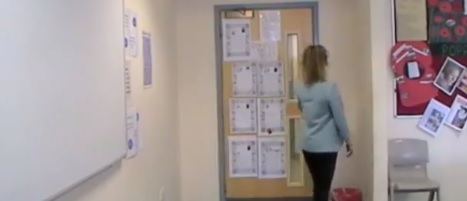
One of the major improvements since the preliminary was our continuity through out the film. Looking back at our prelim there were some huge continuity errors. For example ...


These two images were cut linking one shot to another. The continuity in them is very bad and obvious. The first cut finishes with the door being reached for but NOT actually opened...
In the next cut it has jumped forward and the door has  is already wide open for the girl to walk out.


When editing the final piece we knew just how accurate we had to be with the continuity and how the timing of the cut is so important! We looked extremely closely at this when editing our sequence as we knew that is was one of our major flaws beforehand.
Comparing these two door clips you can see the obvious improvement that we undertook.


Final Storyboard


Friday, 29 March 2013

Our Best Shots

This post is all about the screenshots of our best pieces of editing and filming. Starting at the start going through to the end.


The only time we see a weapon in the opening sequence, you don't see the figure which creates a sense of mystery.
 

In this close-up, we see the figure pulling up his hood, this is coupled with the credits that blur and then focus on the character which allows us to focus on the credit and then the figure pulling up his hood. It also gives a sense as if he is looking in a mirror when he does this.


In this long shot, we see the house of the girl as she's walking out. The hooded figure leans against a lamp-post, but she fails to notice him. The audience now can guess what he is about to do.
 

As the girl begins to walk down the path, the hooded figure begins to follow her. It is a long shot which extends to the end of the road, it is used for the purposes of beginning the chase.
 

This medium shot, along with the pulling up of the hood, is one of our ultimate best shots. The girl in our piece walks accross the screen as the titles begin to show when she reaches the end and when the hooded figure begins to walk accross the screen, they disappear.
 

The close-ups of the girls are used to set-up the rest of the movie, they are there to make the hooded look like a serial-killer, which he is. 
 

This dragging part is particularly good as she seems lifeless. The audience know she is dead, eventhough we didn't show her being killed. They know this beacuse they heard a scream and then saw him dragging her with a blood stain near to her chest and she drops to the floor and he runs away.
 

After he has run away, the camera zooms-in to her corpse.
 

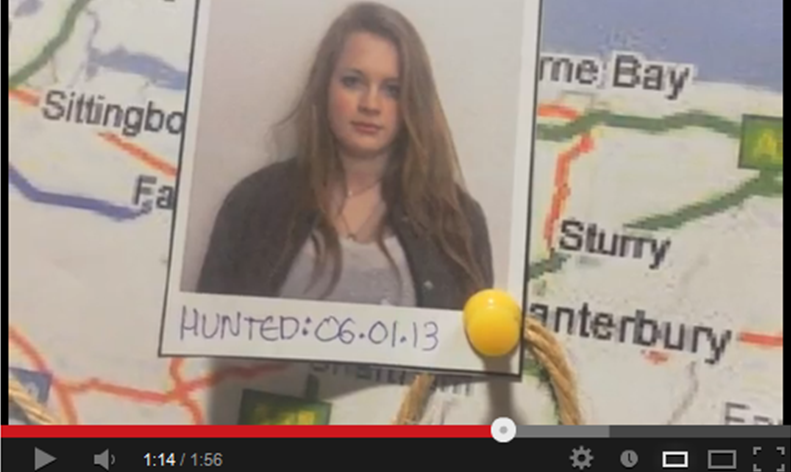
He then pins up her picture and the camera zooms-in to it, showing that she has been "hunted, leaving the audience wondering "what will happen next?" which is obviously our desired intention.
 

Friday, 22 March 2013

Evaluation of New Credits in Film Opening

Due to some of the feedback from the viewing of our opening, we noticed that our credits got most of the negative points from our film, because of this we have now changed and put more credits in to make it look like a more professional film opening. Below I have added the new credits that I have inserted into our credits, I have also analysed them to show why we chose them and what we have changed from the original credits. 


Originally we had Enigma and Flash Productions Presents all on three different shots. The text was in a white bold writing in Helvectia Neue in size 24. It was also in the middle of our film opening, after the names of the people starring in our opening and just before the title. From the research I could see that these production companies and distribution companies are the first credits shown at the beginning of a film. I also changed the credits by merging them into one credit instead of having three different ones.


In our original credits we didn't have a production name, this is a commonly used credit in film openings. So because of this we included it in our film opening. We choose the name Toby Lerone, because we wanted a name that was very original and people would remember. The credit appears suddenly into the shot and then disappear again once the frame is over. We used a pull focus, this brings the attention of the audience to the credit, however we can still the boy pull over his hood in the background. 


This is another new credit that we didn't have in the original credits. I also found in the research that most films have the name of the person who the film is by to tell the audience and to keep them interacted. This is because they also have someone to read as well as watching the opening. I choose to put this credit in this shot, because there was space, as the girl was mainly focused on the right hand side of the screen. 


We kept the girls name in our credits, however we moved it to being the fourth credit shown in the opening instead of the first. This is because most films have their starring actors names after who the film is by and the production companies. I thought that this was a good place to put this credit, as this shot showed the girl coming out of the house, because of this there was space on the bottom right hand corner for the name, so it wasn't covering up any important details in the opening. 


We also kept the boys name in the credits, however we changed it so it wasn't over his face. I thought that this was a good place to put to the credit, because we moved it to when photos of his future and past victims appeared. This is the fifth credit that appears in the opening, after the girls name. It also appears in the gap between the photos, so it's covering up the gap and not hiding any important details.


For our opening to look like a professional film opening, we added more actors names into the film. We also did this because, in this shot it was quite lengthy and not very much happening in it, so I decided to put two actors names in it, to make it more interesting for the audience to watch. I put the credits on the bottom right hand corner, as this was  the place on the shot that had the less amount of information shown. 


This was the most difficult credit to do, as it was the main title of our film opening. We put it over the shot of the girl walking past the wall, as we felt this was the best place to put it as it was just a long shot. We used a pull focus for the main title, so this brings the attention of the audience to the title, however you can still see the girl walking past behind the title. It also fades in wen she just comes in shot and fades out when she is about to walk out of the shot.


From watching example film openings, I could see that they 
included other actors and actresses names that were also in 
the film. However as ours is only an opening not a full film, 
I made up names to include in our credits. This was to make 
the opening looking more professional and also to fill up
space in the shots. In the first credit shown on the right,
we added the name Scarlet Jones, this is shown as a single                                     credit, however the second credit on the right is shown with two names. This is because many films show more than one actors 
name in the same shot. 


We also added the credit Director of Photography into our credits, as we didn't have this credit in the original one. We choose director of photography because it is commonly used in film openings and also because it is an important credit to have. We choose to have it over this shot as there is space on the left hand corner of the shot, as it's not covering up anyones face or important details in the shot.


In our film opening, we also added Music by. This is because it is commonly used in film openings and we have music in our opening, so we thought that it would appropriate for us to use Music By. We choose to put it in this shot, as it was a long shot with not much happening in it. It was also best place to put it, as there was a lot of space to put as the shot is a medium to long shot. 


When watching example film openings, we noticed as a group, that the credit Casting By, appeared in almost all of them, because of this we decided to put it in our film opening, to make it look more professional. We choose to put it in this shot, as there was enough room in the bottom right hand corner of the shot to do so. 
                                                         

In our original credits, we had all our names under the credit directed and edited by with our names each on a different shot afterwards. However as we changed our credits, we just put one of our names, under Edited by. This was because we put the other three names in different credits, and also to make it look more professional and more like a film opening. We also moved the directors credit to the end. 


The last credit we added into our film opening, that we didn't have in our original one is, Written By. We added this as we thought this was an important credit to have in our opening, as its one of the main credits in a film opening. As we had already used our own names in the film opening, we created a name which we could include. Its's in this shot because it's the last shot, in our film opening before the end, where we were able to fit in a credit. We also choose this because it's not covering up anything, that needs to be seen. 


This is the very last credit in our film opening, it is also the last shot as well. From looking at examples of film openings, we found that the directors name goes at the end. We wanted people to notice the directors name, so we put the credit on a black screen, that would make the credit stand out. We faded out the credit, one it was finished to make it look like it was going onto the next scene. We also choose to put his credit last, as the director has big influence on the type of audience that watch the films, so we wanted to draw people in, with this credit. 


We have used the same font throughout our film opening, Helvectia Neue. This was because we wanted to make the film opening more professional and presentable. We also have the names of the production/distribution companies and names of the actors or crew in red, to make it stand out from the background. The job description is in white but in a smaller size than the names, because we wanted to make it stand out also, but differently to the names. Overall we have used 15 credits in our film opening. 


Monday, 18 March 2013

Credit Research

Some of the feedback that we got from our questionnaires was about credits.  Despite most of it being positive, we still felt that we needed to make it look more professional and relevant our opening sequence.  We have therefore been trying to add different credits so that it looks more realistic and be classed as a professional film opening.  Previously we have researched into horror film opening credits, but I decided to do some research into general film openings to see what the common credits were. I have done some research to also see if we could apply any of the common credits to our to our opening sequence.

ParaNorman (2012)


Despite this being an animated film, it still gives us ideas of what to expect generally on a film opening.  For example:

  • Directed by...
  • Produced by...
  • Music by...

Signs (2002)


This film has very clear credits which display all the roles involved with the film.  A lot of these can be related to our media piece in the way in which they read and are presented, for example:
  • Music by...
  • Edited by...
  • Director of Photography
  • Written, Produced and Directed by...

21 Jump Street (2012)


21 Jump Street has some really useful credits that we could apply to our opening sequence. The way in which they are written also helps us to think about how we could present our credits in our film opening. For example:
  • Screenplay by...
  • Music by...
  • Director of Photography
  • Directed by...

From my research, the other credits that we could use are:
  • Casting by... (Se7en - 1995)
  • A Film by... (Se7en - 1995)
  • Costume Designer
  • Based upon the novel by... (The Shining - 1980)
  • Starring... (Bunny Lake is Missing - 1965)
  • In Association With... (I, Robot - 2004)